Labs Required
Thyroid Treatment
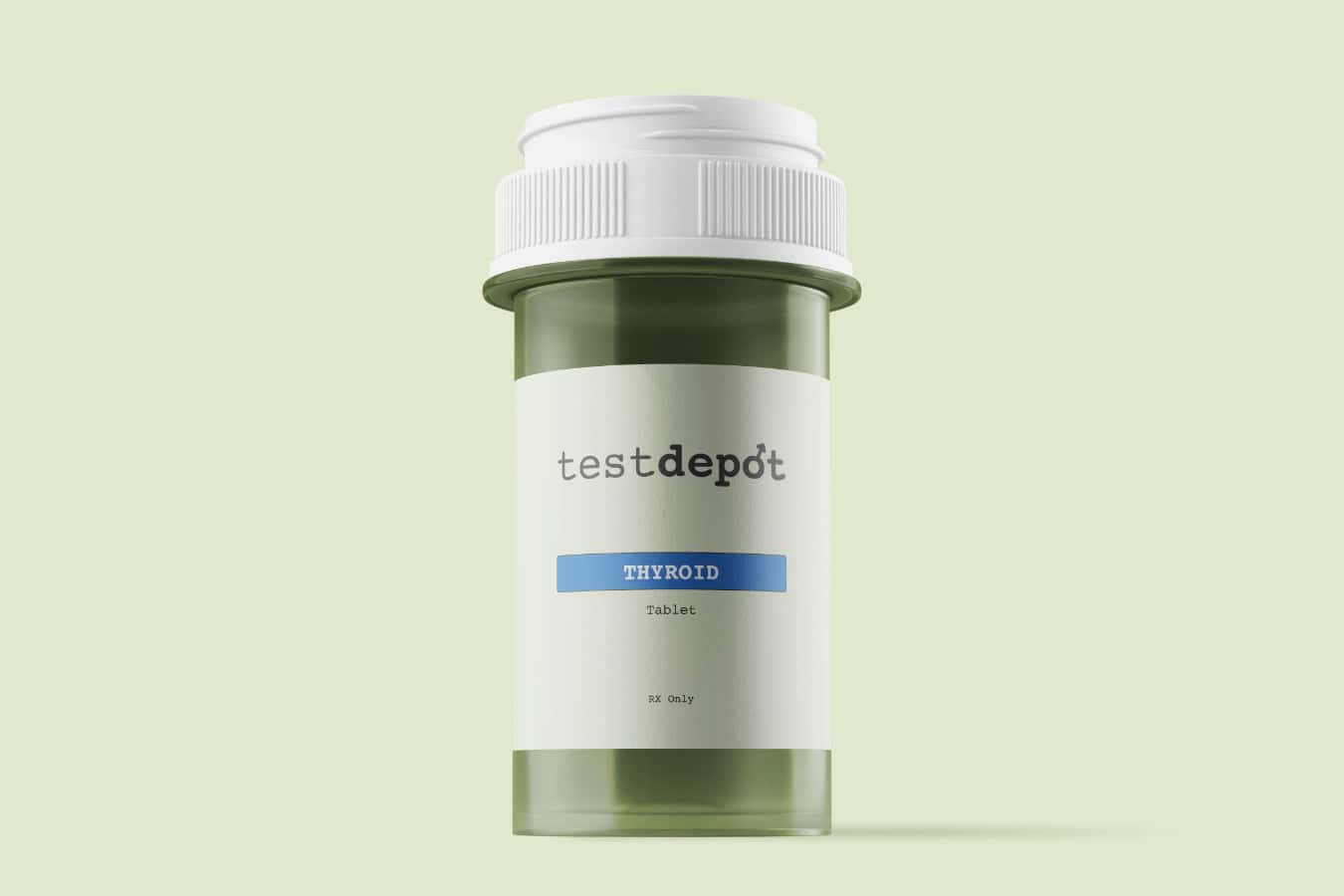
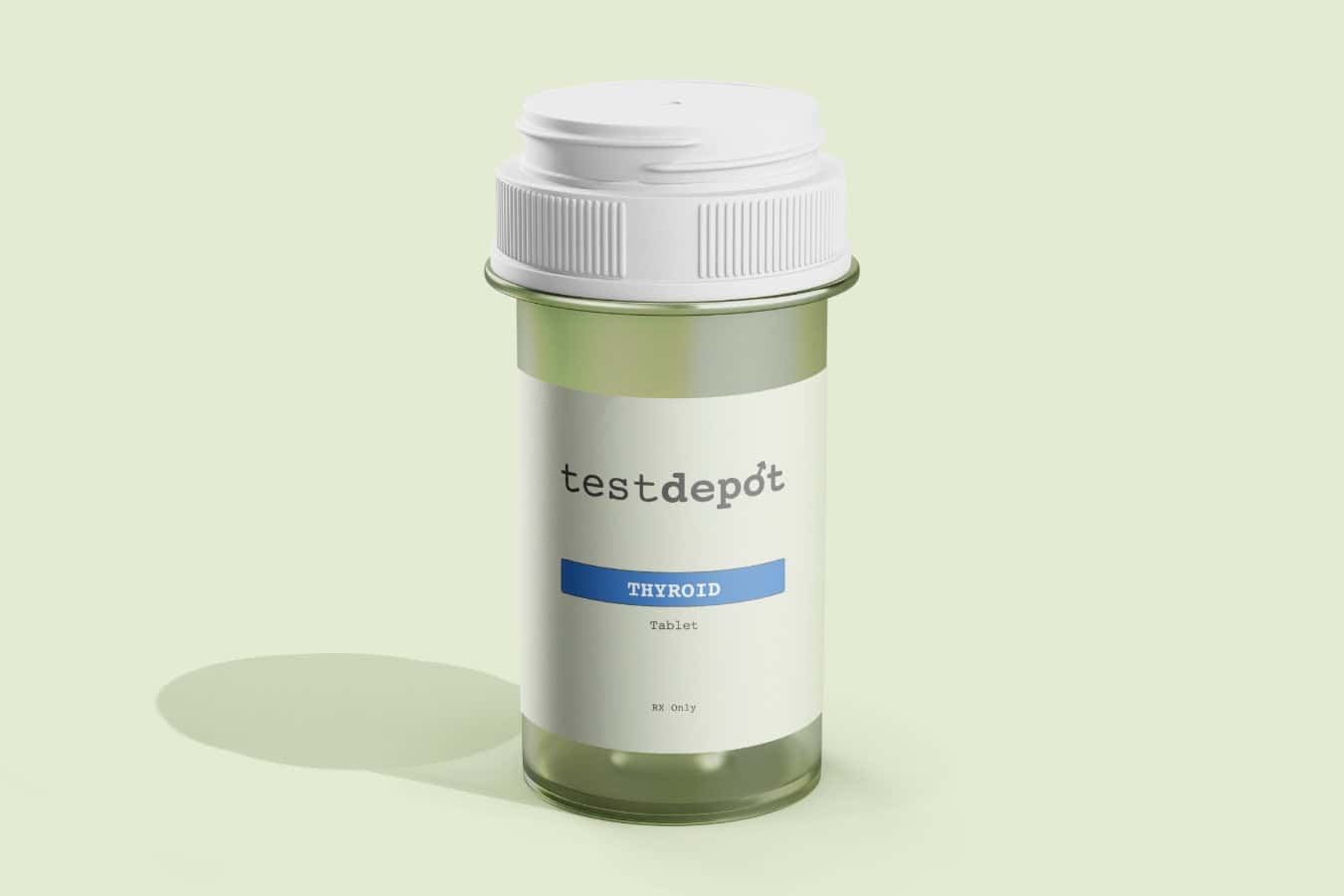
HSA/FSA Eligible ✓
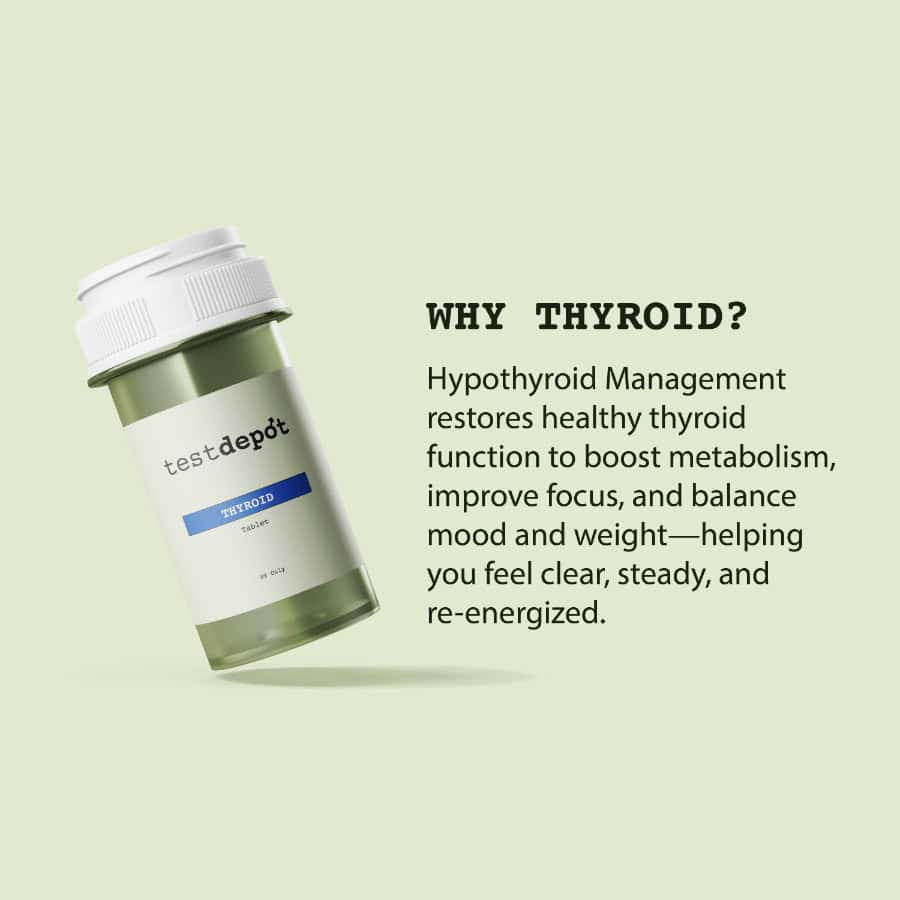
Your doctor tested TSH and said you’re “fine.” You’re not fine. You’re exhausted, can’t lose weight, and your brain feels like it’s running through mud. They blame stress, age, or depression. It’s probably your thyroid. TSH alone doesn’t tell the story. We test the full panel and address any issues with thyroid treatment.
Beyond TSH. We test T3, T4, reverse T3, and antibodies. The tests your doctor skips.
Desiccated thyroid, not Synthroid. Natural T3 and T4 together, not synthetic T4 that your body may not convert.
The missing piece. Already on TRT but still dragging? Thyroid dysfunction mimics low T. Optimizing both is how you actually feel better.
Safety Information
Everything you need
What’s included with thyroid treatment
Safe, effective treatment shipped directly to your door.

Your thyroid protocol
What to Expect:
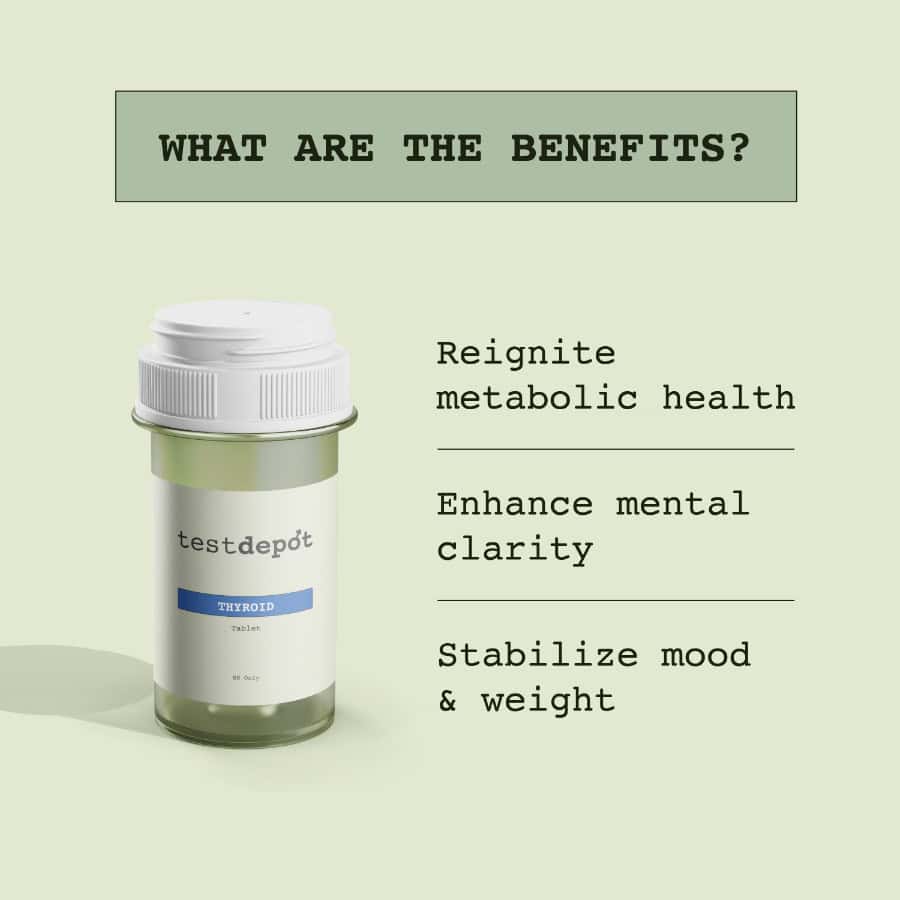
Improved energy and mental clarity within 2 to 4 weeks
Better metabolic function and body composition over 8-12 weeks
Temperature regulation normalizes (no more freezing while everyone else is comfortable)
Includes:
Comprehensive thyroid panel (TSH, free T3, free T4, reverse T3, antibodies)†
Natural desiccated thyroid (NP Thyroid or Armour Thyroid)
Regular monitoring and dose adjustments
Unlimited provider consultations
Free shipping
†Complete Health Panel required for initial assessment. Panel includes TSH, free T3, free T4, and comprehensive metabolic markers. Protocol customized based on your specific thyroid dysfunction pattern.
See the difference
How our thyroid treatment compares
Your doctor ran TSH once, said “normal,” and sent you home. Meanwhile, you’re gaining weight, losing hair, and can’t stay awake past 8 pm. We dig deeper.
Product Comparison

Industry Standard
Transparent pricing, no hidden fees
24-hour response guarantee
Thyroid treatment offered alongside TRT
Thyroid evaluated as part of the complete optimization
Comprehensive thyroid panel (not just TSH)
T3 therapy is available when indicated
Free follow-up consultations
Licensed physician oversight

The hormone your doctor ignores
Your thyroid controls everything. Most doctors test nothing.
Thyroid hormones regulate metabolism, energy production, mental clarity, and body temperature. When thyroid function declines, everything else follows. But most doctors only test TSH, a pituitary hormone that tells you almost nothing about what’s actually happening at the cellular level. We test the full picture and treat what we find.
T4 alone doesn’t work for everyone
Your thyroid produces mostly T4, which must convert to active T3 in your tissues. Some people don’t convert efficiently. They take Synthroid, their TSH looks “normal,” but they still feel terrible because T3 is low. Natural desiccated thyroid (NP Thyroid or Armour) contains both T4 and T3. For poor converters, it works better because it provides active T3 directly.
The TRT connection
Low thyroid mimics low testosterone: fatigue, brain fog, weight gain, and low motivation. If you’re on TRT but still not feeling right, thyroid may be the bottleneck. We see men all the time who optimized testosterone but missed the thyroid piece. Both hormones need to be working for complete optimization.
Simple. Fast. No runaround.
How thyroid treatments work here
Four steps. No insurance battles. Same-day appointments available.‡

1 Free Consult
Book a video call with a licensed provider. We’ll talk through your symptoms, review your history, and determine whether thyroid dysfunction is likely. No cost. No pressure.

2 Get Bloodwork
Have recent labs with comprehensive thyroid markers? We’ll review them. If not, we order your Complete Health Panel, which includes TSH, free T3, free T4, and metabolic markers. Walk into any LabCorp location. Results in 2-3 days.

3 Review Results
We meet again to walk through your labs, explain what the numbers mean, and build your protocol. You’ll see exact pricing before you commit. No surprises.

4 Start Treatment
Your medication ships discreetly. Then we stay with you. Ongoing monitoring. Dose adjustments. We don’t disappear after you pay.
‡Subject to provider availability
What optimized thyroid feels like
Specific outcomes. Realistic timelines. Based on what patients report.
Metabolism unlocks
Your thyroid sets your metabolic rate. When it’s optimized, your body burns fuel rather than storing it as fat. Diet and exercise finally produce results. Most men notice changes within 4 to 8 weeks.
Energy without stimulants
Not the jittery caffeine energy. Real sustained energy from cells producing ATP efficiently. Wake up ready to go instead of dragging through the day. Most men notice improvements within 2-4 weeks.
Brain fog lifts
Thyroid hormones directly affect cognitive function. Optimized levels mean clearer thinking, better memory, and the ability to focus without forcing it. Cognitive improvements typically begin within 2-4 weeks.
Mood stabilizes
Hypothyroidism mimics depression. Many men on antidepressants actually have undiagnosed thyroid dysfunction. Optimize thyroid, stabilize mood. Most men notice mood improvements within 3-4 weeks.
TRT results improve
If you’re on TRT but still not feeling right, thyroid may be the bottleneck. Both hormones need to be optimized for complete results. Adding thyroid optimization often unlocks what TRT alone couldn’t deliver.
Cold tolerance returns
Always freezing while everyone else is comfortable? That’s a classic thyroid sign. Optimization restores normal temperature regulation. Most men notice this within 2-4 weeks of reaching therapeutic levels.
Real patients. Real Results.
Why men choose TestDepot
Hear from men who’ve been where you are.
“My experience with TestDepot has been awesome from the beginning. The Doctors and customer service support team answer any questions I have right away. JD is the customer service representative that helps me and he is fantastic. Thank you TestDepot.”
– Spencer
“Great customer service and Doctors, Been with a few other labs and this is the best”
– Jeff P.
FAQ
Thyroid questions answered
The questions most men ask before starting.
How do I know if I have thyroid problems?
Thyroid dysfunction symptoms include persistent fatigue despite adequate sleep, unexplained weight gain or difficulty losing weight, cold intolerance, brain fog and mental sluggishness, dry skin and hair, hair loss, constipation, mood changes including depression, muscle weakness, and decreased exercise tolerance. However, symptoms alone don’t confirm thyroid issues. Diagnosis requires comprehensive lab testing, including TSH, free T3, free T4, and thyroid antibodies. Many people have subclinical thyroid dysfunction with symptoms but labs that are “technically normal.”
What thyroid tests do you run?
We run comprehensive thyroid panels that include TSH (thyroid-stimulating hormone), free T3 (active thyroid hormone), free T4 (thyroid prohormone), reverse T3 (inactive form that can block T3), and thyroid antibodies (anti-TPO and anti-thyroglobulin) to check for autoimmune thyroid disease. Most doctors test only TSH, which misses the full picture. Free T3 is particularly important because it’s the active form of the hormone that affects your metabolism, but it’s rarely tested in conventional medicine.
What’s the difference between T3 and T4?
T4 (thyroxine) is the storage form of thyroid hormone produced by your thyroid gland. It has four iodine molecules and is relatively inactive. Your body converts T4 to T3 (triiodothyronine) by removing one iodine molecule. T3 is the active hormone that affects your cells’ metabolism and energy production. Some people don’t convert T4 to T3 efficiently, resulting in normal T4 and TSH levels but low T3 and persistent symptoms. This is why testing free T3 is critical.
Why is my TSH normal, but I still have symptoms?
TSH is an indirect measure of thyroid function. It measures your pituitary’s response to thyroid hormone levels, not the actual hormone levels themselves. You can have “normal” TSH but low free T3, poor T4-to-T3 conversion, or thyroid resistance at the cellular level. Additionally, “normal” ranges are very broad. A TSH of 4.5 is technically normal, but many people feel better with a TSH under 2.0. This is why comprehensive testing, including free T3 and free T4, is essential.
Can thyroid medication help with weight loss?
Thyroid treatment and optimization can support weight loss efforts if you have hypothyroidism by restoring normal metabolic function. However, thyroid treatment alone doesn’t cause weight loss. It removes the metabolic barrier that makes weight loss difficult. With optimized thyroid function, your body can respond normally to diet and exercise. Many people find they can finally lose weight with reasonable effort once their thyroid levels are optimized, whereas weight loss was nearly impossible before, regardless of diet or exercise intensity.
What’s the difference between Synthroid and compounded thyroid?
Synthroid (levothyroxine) is synthetic T4 only. It relies on your body converting T4 to active T3, which doesn’t work well for everyone. We prescribe natural desiccated thyroid (NDT), specifically NP Thyroid or Armour Thyroid. These are derived from pig thyroid glands and naturally contain both T4 and T3, plus trace amounts of T2, T1, and calcitonin. For people who don’t convert T4 efficiently, NDT thyroid treatment often works better because it provides the active T3 directly rather than relying on conversion.
How long does thyroid treatment take to work?
Most people notice initial improvements in energy and mental clarity within 2-4 weeks of starting thyroid treatment and optimization. Full symptom resolution typically takes 8-12 weeks as your body adjusts to optimized levels and metabolic function improves. Some symptoms, like weight changes, may take longer, often 3-6 months, for significant body composition improvements. Thyroid medication requires consistent daily use and periodic lab monitoring to ensure optimal dosing.
Do I need to be on thyroid treatment forever?
Most thyroid conditions are permanent and require lifelong thyroid treatment and medication. However, some causes of hypothyroidism are temporary, such as postpartum thyroiditis, medication-induced hypothyroidism, or thyroiditis that resolves. The need for lifelong treatment depends on the underlying cause. Primary hypothyroidism (thyroid gland failure) or Hashimoto’s thyroiditis typically requires permanent treatment. We monitor your thyroid function over time and adjust treatment as needed.
Can stress affect my thyroid?
Yes, chronic stress can significantly impact thyroid function through multiple pathways. Stress increases cortisol, which can inhibit the conversion of T4 to T3 and increase reverse T3 (the inactive form that blocks T3 receptors). Stress also affects the hypothalamic-pituitary-thyroid axis, potentially reducing TSH and thyroid hormone production. Additionally, stress affects gut health, which in turn affects nutrient absorption necessary for thyroid function. Managing stress through lifestyle modifications, sleep optimization, and stress reduction techniques supports thyroid health.
Will thyroid treatment affect my heart?
When properly dosed and monitored, thyroid treatment and medication should not negatively affect your heart. In fact, untreated hypothyroidism can be harmful to cardiovascular health by increasing cholesterol, blood pressure, and heart disease risk. However, excessive thyroid treatment and medication (hyperthyroid state) can cause increased heart rate, palpitations, and cardiovascular stress. This is why we start with conservative doses, monitor your response through labs and clinical assessment, and adjust carefully. Patients with existing heart conditions require especially careful monitoring.
How does thyroid treatment work with TRT?
Many men on TRT still feel suboptimal because thyroid dysfunction is masking their results. Low thyroid causes fatigue, brain fog, and weight gain that mirrors low testosterone. We often see men who’ve been on TRT for months but haven’t gotten the full benefit because their thyroid was never addressed. Optimizing both creates complete hormone optimization, not partial fixes. If you’re on TRT and still dragging, thyroid is worth investigating.
What are the qualifications for thyroid treatment?
You must be at least 18 years old with clinical symptoms and lab evidence of thyroid dysfunction. This includes hypothyroidism, subclinical hypothyroidism, poor T4 to T3 conversion, or Hashimoto’s thyroiditis. Some medical conditions may affect the treatment approach. Your provider will review your full health history and comprehensive thyroid lab results during the consultation to determine appropriate therapy.
Related hormone treatments
Different approaches for different needs.
Testosterone Replacement Therapy
From $99/mo
Enclomiphene
From $99/mo
Kyzatrex
From $159/mo
hCG
$429
Your doctor says your thyroid is “fine.” Your body says otherwise.
Comprehensive testing. Custom protocols. Providers who respond in 24 hours, not the 3-month follow-up your doctor scheduled. Stop accepting fatigue as your new normal.