Sermorelin and tesamorelin are the two drugs people compare when they start looking at growth hormone. Both are GHRH analogs: lab-made copies of the signal your body already uses to tell its own pituitary gland to release growth hormone. Neither one is growth hormone. They prompt the gland at the base of your brain to make more of yours.
They’re used for two different jobs, and only one of them can be made for you at all.
Short version
- Sermorelin gets your own body making more growth hormone. Six-month trials in healthy older adults found three things. IGF-1 up 40% in men and 30% in women off estrogen, the blood marker we track to see whether it’s working. Body fat down about 5% of what the men were carrying, with a matching rise in lean tissue. And better scores on five separate cognitive tests (Vitiello et al., 2001, 2006).
- Tesamorelin is FDA-approved for one thing: fat loss in adults with HIV who have lipodystrophy, a condition that moves fat around the body and packs it around the organs. Its FDA prescribing information says outright that it isn’t for weight loss.
- Only one of the two can be made for you. Since 2020 the FDA has counted tesamorelin as a biologic, which no pharmacy is allowed to make. A pharmacy can make sermorelin for you. The only tesamorelin that exists is the branded product, EGRIFTA, made by a single company.
- What sermorelin’s trials didn’t find. No gain in strength or fitness, and sleep didn’t improve. No adult trial of sermorelin has run past six months.
- Tesamorelin carries the bigger documented risk. Its FDA prescribing information reports new diabetes in 5% of patients against 1% on placebo, measured in its HIV-lipodystrophy trials. Sermorelin’s trials reported few side effects, and nobody has built a modern safety database for it.
- We prescribe sermorelin at TestDepot and don’t carry tesamorelin.
Both act on the same gland the same way, and nobody has ever run a trial putting them head to head. So anyone claiming one is flatly stronger than the other is guessing.
Which one you can actually get
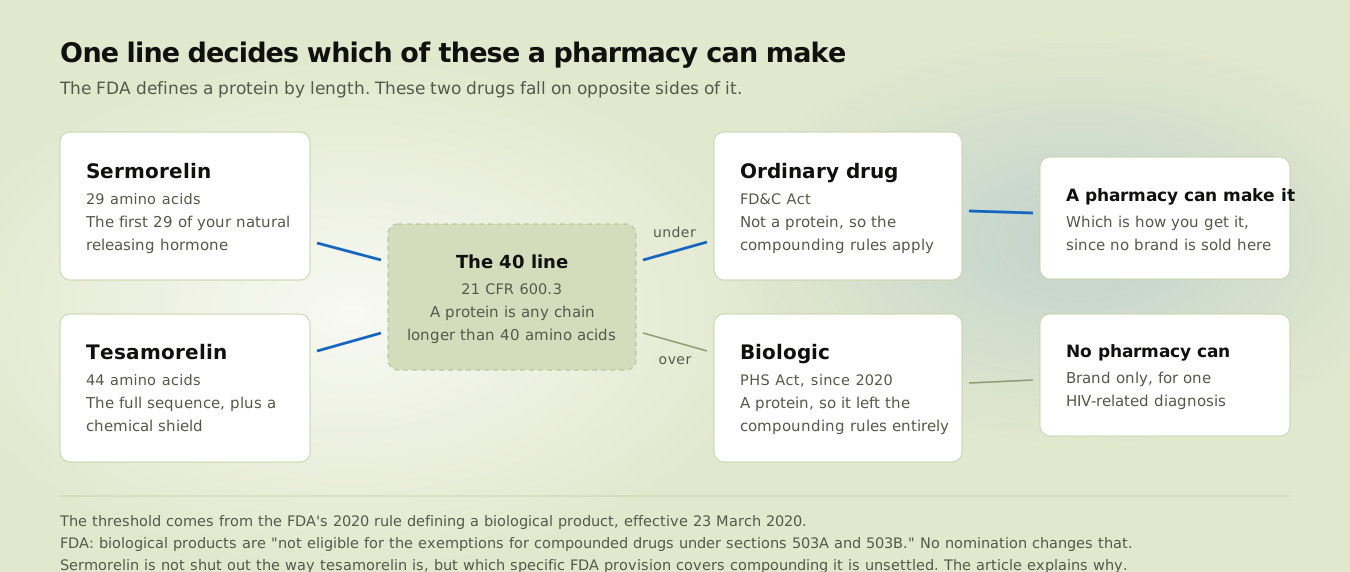
It comes down to how long each chain is. In 2020 the FDA settled a long-running argument by ruling that any chain of more than 40 amino acids counts as a protein (Federal Register, effective 23 March 2020). Tesamorelin is 44, so it became a biologic, which is regulated under a different law. Sermorelin is 29, so it stayed an ordinary drug.
Neither molecule changed. What changed was the category each one sits in, and that category is what decides whether a pharmacy is allowed to make it for you.
For tesamorelin the answer is no. The FDA says biologics are “not eligible for the exemptions for compounded drugs”, and no nomination can change that. The exclusion is categorical, not a listing decision.
Sermorelin goes the other way. Licensed pharmacies compound it, meaning they prepare it and fill it for a patient with a prescription. That said, which provision of the compounding rules covers it is still argued over. Sermorelin is not on the FDA’s list of substances that “may present significant safety risks”, which we checked on 2 September 2026. GHRP-2, GHRP-6, ipamorelin and ibutamoren are all on it. Sermorelin isn’t.
What sermorelin is actually for
Sermorelin is prescribed to raise your own growth hormone. What people are usually after is what comes of that: body composition, recovery, and how sharp they feel.
Here is what a University of Washington program measured in healthy older adults, on a nightly injection, over six months.
Body fat fell about 5% in the men and in the women off estrogen, and lean tissue rose to match (Vitiello et al., 2001). That was measured on a DEXA scan, the X-ray body scan that separates fat from muscle and bone.
IGF-1 rose 40% in men, 30% in women, and under 10% in women taking estrogen replacement (same trial). IGF-1 is the marker we look at on a blood test to see whether sermorelin is working: it’s the growth factor your liver makes in response to growth hormone. Oral estrogen blunts that response, which is worth knowing before you start.

Cognitive function improved. In a six-month trial against placebo in 89 healthy older adults, mean age 68, the treated group scored better on five separate cognitive tests (Vitiello et al., 2006). The improvement showed up regardless of sex, estrogen status, or how sharp people were to begin with.
It’s a small injection under the skin, at night.
What those results don’t cover
Lean mass is not the same as strength. A DEXA scan counts muscle, water, organs and bone together, so lean mass rising is not proof that muscle grew. The same program measured strength and aerobic fitness directly, and neither improved.
Sleep hasn’t been shown to improve.
The catch is blood sugar, and it’s worth raising with your clinician before you start. Across this family of drugs some small studies found insulin working better and others found it working worse (Khorram et al., 1997; Munafo et al., 2005). If you’re diabetic, say so.
What tesamorelin is actually for
Tesamorelin is approved for one thing: reduction of excess abdominal fat in adults living with HIV-associated lipodystrophy, a condition where the body redistributes fat, often piling it around the organs.
Two trials in 806 participants measured visceral fat by CT scan at 26 weeks. It fell by 24 cm² on tesamorelin and rose by 2 cm² on placebo (Falutz, Mamputu et al., 2010).
Every one of those 806 participants had lipodystrophy, and the trial has never been run in anyone who didn’t. Its FDA prescribing information, the document a drug gets when it’s approved, says outright that it’s not for weight loss.
How they work, and how fast your body clears them
Both bind receptors on the pituitary and prompt it to release your own growth hormone in pulses, the way it normally would. That raises IGF-1. Neither drug is growth hormone itself, so you’re prodding a gland rather than replacing a hormone.
Where they differ is structure. Sermorelin is the first 29 amino acids of the natural hormone, and that fragment is the part that does the releasing. Tesamorelin is the full 44-amino-acid sequence with a hexenoyl group stuck onto one end, a short six-carbon chain thought to make the molecule harder for enzymes to chew up.
Both clear the body in minutes: sermorelin in about 4.3 (Soule, King and Millar, 1994), tesamorelin in about 8 (FDA label). That is why sermorelin is a nightly injection and why you take it before bed: it sets off a short pulse, and your body releases most of its own growth hormone while you sleep.
Sermorelin vs tesamorelin, side by side
| Sermorelin | Tesamorelin | |
|---|---|---|
| What it is | The first 29 amino acids of the growth hormone-releasing hormone your body already makes | A modified 44-amino-acid version of the same hormone, with an extra chemical group that slows enzyme breakdown |
| Can you actually get it? | Yes. Prescribed after a consult, then compounded by a licensed pharmacy | No, not compounded. At 44 amino acids it’s a biologic, and biologics have no compounding route. Brand only |
| What its label says it’s for | Nothing currently. Approved in 1997 as GEREF for growth hormone deficiency in children; the maker stopped making it in 2008 and the approval was withdrawn in 2009, at their request and not for safety | Excess abdominal fat in adults with HIV-associated lipodystrophy. The label states it’s not for weight loss |
| What the evidence shows | Placebo-controlled trials in healthy older adults: IGF-1 up 40% in men, 30% in women off estrogen. Body fat down about 5% of what the men were carrying, with a matching lean-mass gain the investigators called preliminary. Five thinking-test measures improved over six months | Two trials, 806 participants. Visceral fat fell 24 cm² on the drug and rose 2 cm² on placebo at 26 weeks. All participants had HIV-associated lipodystrophy |
| What it hasn’t been shown to do | Improve strength, fitness or sleep. No adult trial of sermorelin past six months | Anything outside its one approved condition |
| Known risks | Few side effects reported in trials, and no modern safety database behind them. Related drugs have moved blood sugar in both directions, so it gets watched | 25% vs 14% injection-site reactions, 5% vs 1% new diabetes, and IGF-1 above the normal range in 47% at 26 weeks, all measured in its HIV-lipodystrophy trials |
| How long it stays in you | 4.3 to 7 minutes, measured intravenously | 8 minutes under the skin, 26 to 38 at steady state |
| What it costs at TestDepot | From $259, billed every 6 weeks. One 15mg vial, all injection supplies, unlimited consults and shipping. No separate consult fee, and labs aren’t required to start | We don’t prescribe it. One company makes it and there’s no generic |
Which one for which goal
If you have HIV-associated lipodystrophy and the goal is visceral fat, tesamorelin is the drug with the approval and the trial data behind it. Speak to your HIV care team.
If the goal is body composition over months, sermorelin is the one we prescribe. That is where its evidence sits: less body fat, more lean tissue, on a nightly injection, in healthy older adults.
If the goal is feeling sharper, sermorelin is the one with evidence behind it: five separate cognitive tests improved over six months.
If the goal is rapid weight loss, look elsewhere. Neither of these is a weight-loss drug and neither is an anabolic, meaning neither drives muscle tissue to grow the way testosterone does.
Sermorelin also gets compared to ipamorelin, a different drug on a different receptor. We covered sermorelin vs ipamorelin separately.
Side effects
Tesamorelin’s side effects are documented on its FDA label, because it has one. In its HIV-lipodystrophy trials, 25% of patients had injection-site reactions against 14% on placebo. The label also records hypersensitivity reactions, meaning allergic or allergy-like ones. Fluid retention shows up too, as joint pain, swelling in the hands and feet, and carpal tunnel symptoms.
Blood sugar. In those same trials, 5 patients in 100 developed diabetes against 1 in 100 on placebo over 26 weeks.
Its label also tracks the growth factor itself. At 26 weeks, 47% of patients had IGF-1 above the normal range, an effect the label says can appear as early as 13 weeks. It tells doctors to consider stopping if the level stays there (FDA label).

Sermorelin has no current FDA prescribing information, so there is no comparable list for it, and nobody has built a modern safety database for it either. The closest adult evidence is a five-month trial in 19 people injecting a close analog nightly, where the only adverse effect was a temporary rise in blood fats, which resolved (Khorram et al., 1997).
The blood sugar question
Blood sugar applies to the whole drug class, not just tesamorelin, and the studies disagree.
Against: a modified long-acting GHRH impaired glucose tolerance in older adults on repeated dosing (Munafo et al., 2005). And in a 152-adult randomized trial of tesamorelin, fasting insulin rose 35% in the participants who had mild cognitive impairment (Baker et al., 2012).
For: a nineteen-person trial of a close chemical relative of sermorelin found insulin sensitivity improved in the men (Khorram et al., 1997), and the six-week trial found no change at all. If you’re prediabetic or have a family history, that belongs in the conversation with your clinician regardless of which drug is on the table.
Who shouldn’t take either
Tesamorelin’s label rules out pregnancy, active cancer, anything that has disrupted the pituitary or the part of the brain that signals it, and known hypersensitivity to the drug or its inactive ingredients. A cancer you’ve been treated for is a different question: its label asks that the cancer be inactive and the treatment finished, and that a doctor weigh the risk with you first. Sermorelin has no US label, so there’s no official list. The same cautions apply based on how it works, and it shouldn’t be used in pregnancy or while nursing. One more worth raising with your clinician: an untreated underactive thyroid can blunt the response to sermorelin, which Ireland’s product sheet records for the same product.
What TestDepot prescribes
TestDepot prescribes sermorelin. We don’t carry tesamorelin.
Wellness & Longevity
Sermorelin
Prescribed by our clinicians as part of wellness and longevity care. Prompts your own pituitary to release growth hormone rather than replacing it.
From $259 every 6 weeks
Florida residents only.
FAQ
Does tesamorelin build muscle better than sermorelin?
No trial has ever compared them, so nobody can tell you.
What sermorelin’s own trials showed is lean tissue rising alongside the fat loss, measured on a DEXA scan. Honestly, that is not the same as building muscle: a scan counts muscle, water, organs and bone together, and when the same program measured strength directly it didn’t move. Tesamorelin’s trials measured visceral fat and never looked at muscle at all.
What is the strongest growth hormone peptide?
“Strongest” isn’t something anyone has measured, because no trial has put these drugs side by side.
Tesamorelin holds the only FDA approval, and it covers one condition you almost certainly don’t have. Sermorelin is the one with placebo-controlled results in healthy adults, and the one a pharmacy can actually prepare for you.
What is more effective than sermorelin?
For visceral fat in someone with lipodystrophy, tesamorelin. For anything else, nobody can say, because the comparison has never been run.
Growth hormone itself is more potent, and that has been measured directly (Chen et al., 1993). That said, it’s a different class of drug: you’re replacing the hormone instead of prompting your own, with its own risks and its own approved uses. Sermorelin sold as “just like HGH” is a claim the one head-to-head trial contradicts.
Which is better for me, tesamorelin, sermorelin, or ipamorelin?
It depends on your goal, and on what’s actually obtainable.
Tesamorelin fits one diagnosis and can’t be compounded. Sermorelin is what we prescribe for general hormone support, and it’s the one with placebo-controlled data in healthy adults. Ipamorelin works on a different receptor entirely and has no lawful compounding route either, which we cover in sermorelin vs ipamorelin. Bring your goal to a clinician rather than picking the peptide first.
Can you take sermorelin and tesamorelin together?
No established reason to, and we don’t prescribe the combination. They hit the same receptor the same way, so running both adds cost and side-effect risk without buying you a new effect.
Is sermorelin FDA approved?
Not right now, and the reason matters. It was approved in 1997 as GEREF, and the maker stopped making it in 2008.
Here’s the thing: the FDA confirmed in writing in 2013 that it was not pulled for safety or effectiveness reasons (Federal Register, 4 March 2013). It came off the market commercially, not because anyone decided it was unsafe. That finding is not the FDA saying the drug works, and it is not on its own what permits compounding.
Does sermorelin help you sleep?
This is what we get asked most, and the honest answer is no, not on the evidence for the way you’d take it.
The mechanism has support in young men. Given GHRH as four injections straight into a vein, deep sleep went from 14.0% of the night on placebo to 20.2% on the drug, with each man acting as his own comparison (Steiger et al., 1992). It’s also sex-specific: the same researchers later found systemic GHRH impairs sleep in healthy young women (Mathias et al., 2007).
The sermorelin-specific evidence doesn’t show the benefit. One placebo-controlled trial used sermorelin acetate by name, given as a nightly shot under the skin. It reported slightly worse sleep-quality scores on the drug, from a questionnaire rather than sleep-lab measurement (Vitiello et al., 2001).
The gap is route and measurement. The study that found deeper sleep gave GHRH into a vein in a sleep laboratory and measured brain-wave stages. The sermorelin trial used nightly shots under the skin and asked people how they slept.
The study that would settle it was actually run. The University of Washington enrolled 80 older adults in a randomized placebo-controlled trial with objective sleep measurement, and it completed in 2007 (NCT00000380). No results were ever posted for it, and no paper reporting its sleep outcomes appears to have been published.
You’ll find pages claiming a 34% or 45% increase in deep sleep on sermorelin. We looked for those trials and couldn’t find them.
How long does either take to work?
Months, not weeks. The tesamorelin trials ran 26 weeks before reporting a visceral fat result, and body composition is slow to move. Sermorelin’s six-week trial found no IGF-1 change (Vittone et al., 1997); its six-month program did.
Related reading
- Is testosterone therapy safe?: the monitoring side of hormone therapy in more detail.
- Performance Panel: the lab panel that includes IGF-1, if you want to track response.
- Our clinicians: who reviews and prescribes, with license and NPI details.
References
Safety and pharmacokinetic figures come from the FDA and HPRA labels and the GEREF prescribing information. Efficacy figures come from the peer-reviewed pooled analysis the approval rests on. Each is linked at the point of use where a public link exists, and listed again here.
- EGRIFTA SV prescribing information (tesamorelin): description, pharmacokinetics, clinical studies, adverse reactions, contraindications, dosage and administration, and limitations of use. US Food and Drug Administration, via DailyMed.
- Determination That GEREF (Sermorelin Acetate) Injection … Were Not Withdrawn From Sale for Reasons of Safety or Effectiveness. Federal Register, 4 March 2013.
- Summary of Product Characteristics, sermorelin: plasma half-life 6 to 7 minutes intravenously, and the facial flushing, facial heat and injection-site pain reported for a single IV test dose. Health Products Regulatory Authority (Ireland). GEREF 50, the 50 µg diagnostic ampoule; text revised May 2004. Source of the upper end of the 4.3 to 7 minute intravenous range in the comparison table, and of the statement that untreated hypothyroidism may affect the response. Verbatim: “Untreated hypothyroidism or use of anti-thyroid medications… may affect the response to Geref.” Checked 2026-09-09. PDF.
- Soule S, King JA, Millar RP. Incorporation of D-Ala2 in growth hormone-releasing hormone-(1-29)-NH2 increases the half-life and decreases metabolic clearance in normal men. Journal of Clinical Endocrinology & Metabolism, 1994;79(4):1208–1211. The one human study we found publishing a numeric disappearance half-time for sermorelin: 4.3 ± 1.4 minutes (mean ± standard error, n = 10) by intravenous infusion. The figure is the unmodified GHRH(1–29)-NH2 comparator arm; the paper’s subject is a modified D-Ala2 analog.
- Vitiello MV, Schwartz RS, Moe KE, Mazzoni G, Merriam GR. Growth hormone-releasing hormone administration in older adults. Dialogues in Clinical Neuroscience , 2001;3(3):229–236. The University of Washington program paper, and the source of most sermorelin-specific figures on this page. Identifies the study drug verbatim as “GHRH(1-29)NH2, sermorelin acetate, Geref, Serono Laboratories Inc,” given as a single evening subcutaneous injection at 14 µg/kg (about 1 mg), in double-blind placebo-controlled trials. Source of: men doubling 24-hour GH secretion with a 40% rise in IGF-1; a 30% IGF-1 rise in women not on estrogen replacement; a decrease of about 5% in percentage body fat in men and non-estrogen-replaced women with a reciprocal increase in lean body mass; cognitive performance 5% to 7% above placebo; the absence of any improvement in strength or aerobic fitness; and the sleep result, a small but statistically significant worsening of Pittsburgh Sleep Quality Index scores on drug with no change on placebo. The sleep and body-composition figures were preliminary data from trials then ongoing.
- Khorram O, Laughlin GA, Yen SS. Endocrine and metabolic effects of long-term administration of [Nle27]growth hormone-releasing hormone-(1-29)-NH2 in age-advanced men and women. Journal of Clinical Endocrinology & Metabolism, 1997;82(5):1472–1479. Ten women and nine men aged 55 to 71; sleep quality unaffected in both sexes; lean body mass, insulin sensitivity, well-being and libido improved in men. Two limits worth stating. The drug is a modified [Nle27] analog, not sermorelin itself. And although the authors describe it as “a single blind, randomized, placebo-controlled trial,” the structure was a run-in rather than two parallel groups: every participant injected saline nightly for four weeks and then the analog for sixteen weeks, so each subject served as their own comparison and no separate placebo group ran alongside.
- Compounding and the FDA: Questions and Answers. US Food and Drug Administration. Source of the quoted statement that biological products are “not eligible for the exemptions for compounded drugs”, which is why tesamorelin has no compounding route.
- Falutz J, Mamputu J-C, et al. Effects of tesamorelin (TH9507), a growth hormone-releasing factor analog, in human immunodeficiency virus-infected patients with excess abdominal fat: a pooled analysis of two multicenter, double-blind placebo-controlled phase 3 trials with safety extension data. Journal of Clinical Endocrinology & Metabolism, 2010;95(9):4291-4304. Source of the pooled participant count and the visceral-fat figures quoted above, verbatim from the abstract: -24 ± 41 cm² on tesamorelin against +2 cm² on placebo, and triglycerides -37 ± 139 mg/dL against +6 ± 112 mg/dL on placebo (P < 0.001; treatment effect on triglycerides -12.3%). Checked against the abstract 2026-09-03.
- Ferdinandi ES, Brazeau P, High K, et al. Non-clinical pharmacology and safety evaluation of TH9507, a human growth hormone-releasing factor analogue. Basic & Clinical Pharmacology & Toxicology, 2007;100(1):49–58. The source for the animal finding that the hexenoyl modification lengthens tesamorelin’s elimination; the FDA label describes the structure but not the mechanism.
- EGRIFTA (tesamorelin for injection) prescribing information, 1 mg/vial formulation. Drugs@FDA, supplements 012/013. Source of the 26 minute and 38 minute mean elimination half-lives, in healthy subjects and HIV-infected patients respectively, after subcutaneous administration of a 2 mg dose for 14 consecutive days (§12.3, Elimination). Verified against the label PDF, 2026-09-01.
- GEREF (sermorelin acetate) US prescribing information, EMD Serono. No figure on this page is sourced to this label. Its side-effect rates and the thyroid directive were removed on 2026-09-09, because the label itself could not be obtained. Listed so the record shows what was consulted and why it was not used. The product was discontinued in 2008. There is no primary-hosted copy: DailyMed carries no sermorelin SPL, and Drugs@FDA lists NDA 020443 but hosts no label document for it.
- EGRIFTA WR prescribing information. The newer tesamorelin formulation, consulted when establishing that every published half-life for both drugs is measured in minutes.
- Steiger A, Guldner J, Hemmeter U, Rothe B, Wiedemann K, Holsboer F. Effects of growth hormone-releasing hormone and somatostatin on sleep EEG and nocturnal hormone secretion in male controls. Neuroendocrinology, 1992;56(4):566–573. Source of the slow-wave sleep figures cited in the FAQ: four 50 microgram intravenous boluses in 7 male controls, with slow-wave sleep rising from 14.0 percent of the night on placebo to 20.2 percent on GHRH. Intravenous administration in a sleep laboratory, measured by EEG, not subcutaneous sermorelin.
- Mathias S, Held K, Ising M, Weikel JC, Yassouridis A, Steiger A. Systemic growth hormone-releasing hormone (GHRH) impairs sleep in healthy young women. Psychoneuroendocrinology, 2007;32(8-10):1021-1027. Source of the statement that the GHRH sleep effect is sex-specific and runs in the opposite direction in women.
- Certain Bulk Drug Substances for Use in Compounding that May Present Significant Safety Risks. US Food and Drug Administration. Checked 2026-09-02: sermorelin does not appear on this Category 2 list.
- Bulk Drug Substances Used in Compounding Under Section 503A of the FD&C Act. US Food and Drug Administration. Source of the statement that which provision covers sermorelin compounding is still debated. Checked 2026-09-03: sermorelin does not appear on the 503A bulks list or its category lists. It does appear on the separate 503B list, under “Category 1: Bulk Drug Substances Under Evaluation,” marked as a component of an FDA-approved drug (FDA, revised 2025-03-21, page 6). That list governs outsourcing facilities rather than dispensing pharmacies. Neither list includes tesamorelin, whose exclusion from compounding comes from its status as a biologic rather than from any list.
- Vitiello MV, Moe KE, Merriam GR, Mazzoni G, Buchner DH, Schwartz RS. Growth hormone releasing hormone improves the cognition of healthy older adults. Neurobiology of Aging, 2006;27(2):318–323. Six months of daily GHRH or placebo in 89 healthy older adults, mean age 68.0. Improved WAIS-R performance IQ (p<0.01), picture arrangement (p<0.01), finding A’s (p<0.01), verbal sets (p<0.01) and single-dual task (p<0.04), independent of gender, estrogen status and baseline cognition. The paper’s abstract names the agent only as GHRH; it is identified as sermorelin acetate (Geref) in the same investigators’ program paper at reference 5.
- Vittone J, Blackman MR, Busby-Whitehead J, et al. Effects of single nightly injections of growth hormone-releasing hormone (GHRH 1-29) in healthy elderly men. Metabolism, 1997;46(1):89–96. The six-week trial cited above for the absence of an IGF-1 change. Eleven healthy men aged 64 to 76, GHRH(1-29) 2 mg subcutaneously nightly for six weeks. Nocturnal GH release rose (p<0.02) and GH peak area rose (p<0.006), but IGF-I, IGFBP-3 and GHBP did not change, and the paper reports no alteration in weight, body composition, glucose tolerance or lipids.
- Chen RG, Shen YN, Yei J, et al. A comparative study of growth hormone (GH) and GH-releasing hormone(1-29)-NH2 for stimulation of growth in children with GH deficiency. Acta Paediatrica, 1993;82(s388):32–35. Sixty GH-deficient children randomized to GHRH 30 or 60 µg/kg/day or growth hormone. Mean height velocity at six months: 9.2 and 9.3 cm/year on GHRH against 14.6 cm/year on growth hormone, p<0.01. The only published head-to-head comparison, and the source of the statement that sermorelin is not a substitute for growth hormone.
- Cassorla F, Mericq V, García H, et al. The effects of beta 1-adrenergic blockade on the growth response to growth hormone (GH)-releasing hormone therapy in GH-deficient children. Journal of Clinical Endocrinology & Metabolism, 1995;80(10):2997–3001. Double-blind placebo-controlled randomized crossover, eleven children, two twelve-month periods, GHRH 20 µg/kg subcutaneously at bedtime. Growth velocity rose from 2.6 ± 0.4 cm/year before treatment to 5.4 ± 1.0 in year one on GHRH plus placebo, then fell to 4.2 ± 1.4 in year two. Read the design carefully: the trial was testing whether adding the beta-blocker atenolol improved GHRH’s effect, so every child received GHRH throughout both periods and the crossover was atenolol against placebo. There was no GHRH-free arm. That makes the year-two decline a within-treatment fall rather than a comparison against untreated growth, which is the honest limit on how far this figure can be pushed. Consulted on the duration question; its figures are not cited on the page. Pediatric, and the endpoint, meaning the thing the trial set out to measure, is growth rather than any adult outcome.
- Growth Hormone Releasing Hormone (GHRH) Treatment for Age-Related Sleep Disturbances, NCT00000380. ClinicalTrials.gov, University of Washington with the National Institute of Mental Health. Eighty older adults, randomized and placebo-controlled, with objective sleep quality among the listed outcome measures. Primary completion July 2007, status Completed. Checked 2026-09-03: no results are posted, and we found no publication reporting its sleep outcomes.
- Munafo A, Nguyen TX, Papasouliotis O, et al. Polyethylene glycol-conjugated growth hormone-releasing hormone is long acting and stimulates GH in healthy young and elderly subjects. European Journal of Endocrinology, 2005;153(2):249–256. Twelve healthy young men given single subcutaneous doses, and twenty subjects over 60 given repeated administration. Source of the statement that repeated dosing impaired glucose tolerance in the older group; the abstract’s wording is “some impairment of glucose tolerance was observed in the elderly following repeated administration”. Checked 2026-09-09.
- Baker LD, Barsness SM, Borson S, Merriam GR, Friedman SD, Craft S, Vitiello MV. Effects of growth hormone-releasing hormone on cognitive function in adults with mild cognitive impairment and healthy older adults. Archives of Neurology, 2012;69(11):1420–1429. Randomized double-blind placebo-controlled, 152 adults aged 55 to 87, 20 weeks. Source of the 35% rise in fasting insulin in participants with mild cognitive impairment, and of adverse events in 68% of treated participants against 36% on placebo. The drug used was tesamorelin, so the finding speaks to the GHRH class rather than to sermorelin specifically.
- Clemmons DR. Long-acting forms of growth hormone-releasing hormone and growth hormone: effects in normal volunteers and adults with growth hormone deficiency. Hormone Research in Paediatrics, 2007;68(Suppl 5):178–181. Background on long-acting GHRH preparations, consulted for the half-life section.
- Dominikowski A, et al. The emerging landscape of performance-enhancing peptides modulating GH-IGF1 axis: bridging the gap between clinical evidence and patient self-administration. Frontiers in Endocrinology, 2026. And Mendias CL, Awan TM. Safety and Efficacy of Approved and Unapproved Peptide Therapies for Musculoskeletal Injuries and Athletic Performance. Sports Medicine, 2026. Two peer-reviewed reviews published within the last year, consulted as background on the drug class.
- Definition of the Term “Biological Product”. Federal Register, 85 FR 10057, 21 February 2020, effective 23 March 2020, codified at 21 CFR 600.3. Defines a protein as an amino acid polymer of more than 40 amino acids. Source of the distinction that puts tesamorelin, at 44 amino acids, into the biologic category and leaves sermorelin, at 29, outside it. Tesamorelin’s transition is recorded in the FDA’s list of approved NDAs deemed to be BLAs, page 9, former NDA 022505.
- Khorram O, Yeung M, Vu L, Yen SS. Effects of [Nle27]growth hormone-releasing hormone (GHRH)-(1-29)-NH2 administration on the immune system of aging men and women. Journal of Clinical Endocrinology & Metabolism, 1997;82(11):3590–3596. The immune-endpoint report of the nineteen-person trial cited in the blood sugar section. This is the same 19 subjects as reference 6, reported a second time for different endpoints, so the two papers are one trial rather than two. The same run-in limitation applies: every participant took saline for four weeks and then the analog for sixteen, with no separate placebo group.
- 21 CFR 216.24, Drug products withdrawn or removed from the market for reasons of safety or effectiveness. Cornell Legal Information Institute. Checked 2026-09-03, all 84 entries read: neither sermorelin, sermorelin acetate, GEREF nor tesamorelin appears on it. A drug on this list may not be compounded at all, so its absence is a precondition for everything else on this page.
- EGRIFTA WR (tesamorelin for injection) prescribing information. US Food and Drug Administration, revised March 2025. Section 4 contraindicates active malignancy and requires that any preexisting malignancy be inactive and its treatment complete; section 5.1 asks for careful evaluation of benefit against the risk of re-activation before treating someone with a treated, stable cancer.
This article is for general information and is not individual medical advice. Sermorelin and tesamorelin are prescription medicines; whether either is appropriate for you depends on your labs, your history and a clinician’s judgment. Talk to a clinician before starting or stopping any treatment.